Meditation, as we already know, has many health benefits. However, what is not very well known is that even the various mudras used in meditation come with specific benefits.

Mudra, meaning seal, is a Sanskrit word for non-verbal communication in the form of hand gestures and finger postures used in Indian social life, dance, yoga and meditation practice. Other than being used to symbolize meanings such as a greeting or a blessing, and tell stories in dance, the combined effect of position of the fingers and hands stimulates different parts of body and mind, which further influences the flow of prana or life-force in the body. In addition, mudras are supposed to connect us to cosmic energy thereby transforming our mental states, and opening us to deeper spiritual experiences.
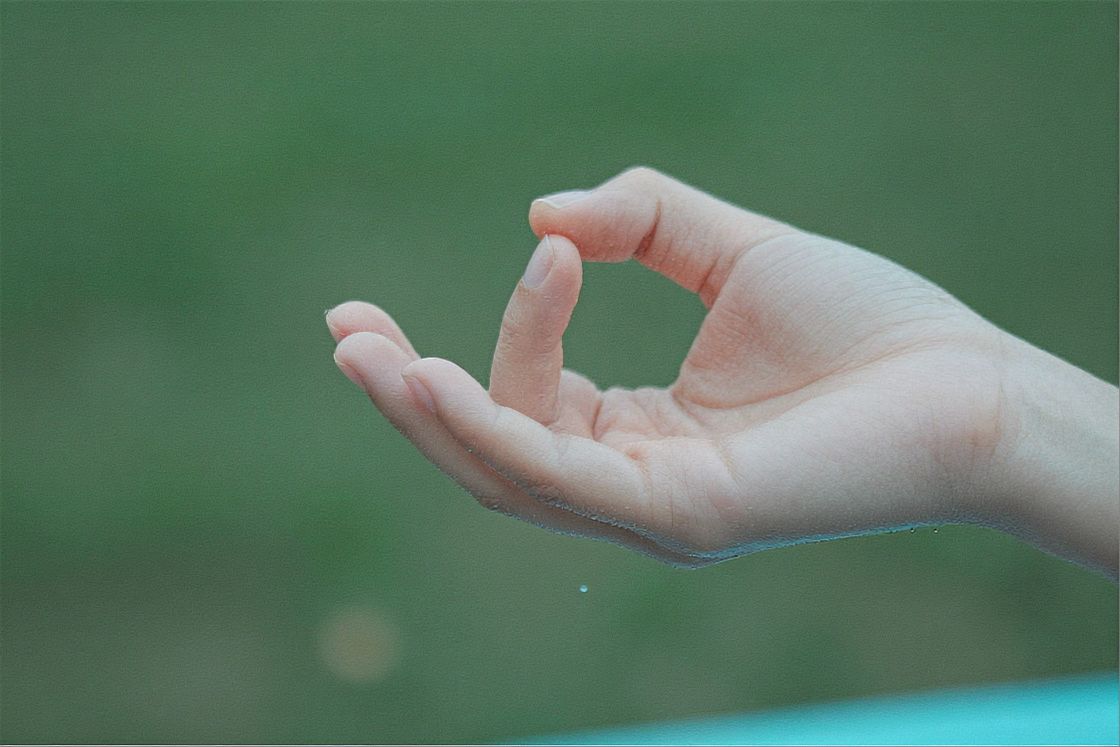
The simplest and possibly the most common mudra used in meditation is the Gyan (knowledge) mudra. Gyan mudra is formed simply by joining index finger with the thumb and relaxing the rest of the fingers, as shown in the pictures above. While Gyan mudra is often used during meditation, it can also be used to relax. A continued use of Gyan mudra is said to increase concentration.
To practice Gyan mudra:
Sit comfortably and make sure your back and neck are straight. Sitting in padmasna (lotus pose) has an added benefit. However, it is more important to be comfortable. So if you cannot sit in padmasna, use your favorite chair.
Bring the tips of your index finger and thumb together, keeping the other three fingers straight but relaxed.
Place the hands in Gyan mudra, with the back of the hands on your respective knees, and palms facing upward.
Put a little pressure on joined tips and relax the rest of the hand.
Practice it for 20-30 minutes every day to improve your concentration and memory, and relieve stress.
No comments yet. Be the first to share your thoughts!
You need to sign-in to post a comment.
Sign In